The word Yoga is often used casually today—as a synonym for exercise classes, wellness trends, or even a lifestyle aesthetic. However, to truly understand what is yoga, we must look beyond the modern fitness studio and return to its ancient, transformative roots. Historically and philosophically, it is not something you do; it is a state of being you achieve.
The Roots: Three Classical Definitions
The term originates from the Sanskrit root yuj, which translates to “yoke,” “join,” or “unite.” Throughout history, three distinct classical meanings have defined the practice:
1. Yoga as Union (yugir yoga)
This is the heart of the Hatha Yoga tradition. It represents the merging of individual consciousness with universal consciousness. Imagine a drop of water returning to the ocean; it doesn’t lose its essence but realizes its oneness with the whole.
2. Yoga as Concentration (yuja samadhan)
As defined in Patanjali’s Yoga Sutras (Raja Yoga), it is the process of holding the mind steadily on a single point until it transcends thought. Here, it is the method used to achieve samadhi, or total absorption.
3. Yoga as Control (yuja samyamane)
Reflected in the Kathopanishad, this definition focuses on the mastery of the senses and the cessation of mental fluctuations. It suggests that any action performed with total awareness and self-regulation becomes an act of Yoga.
The Ultimate Goal: Liberation
Ultimately, the practice aims at enlightenment—variously called self-realization, kaivalya, or freedom. This journey is typically pursued through two primary paths:
- Raja Yoga: Focusing on the stillness of the mind to reveal the true Self.
- Hatha Yoga: Balancing the body’s energies and awakening kundalini to merge with higher consciousness.
Yoga vs. Asana vs. Exercise
A common misconception in the 21st century is that Yoga is simply “stretching.” While physical postures (asana) are a vital part of the system, they are only one of the eight limbs of Yoga.
| Feature | Yoga | Asana | Physical Exercise |
| Focus | Holistic: Body, Mind, and Spirit. | Physical and Mental balance. | Physical body only. |
| System | Activates all internal systems. | Calms the parasympathetic nervous system. | Activates the sympathetic (stress) response. |
| Energy | Conserves and directs energy. | Builds awareness and relaxation. | Often leaves the body tired or drained. |
| Goal | Self-realization and liberation. | Preparation for meditation. | Fitness, weight loss, or muscle gain. |
The distinction is vital: Asana is a tool to strengthen and relax the body so that one can sit steadily in meditation. Stretching is a physical act; Yoga is a spiritual journey.
The SKY Perspective: Authentic Practice in Bali
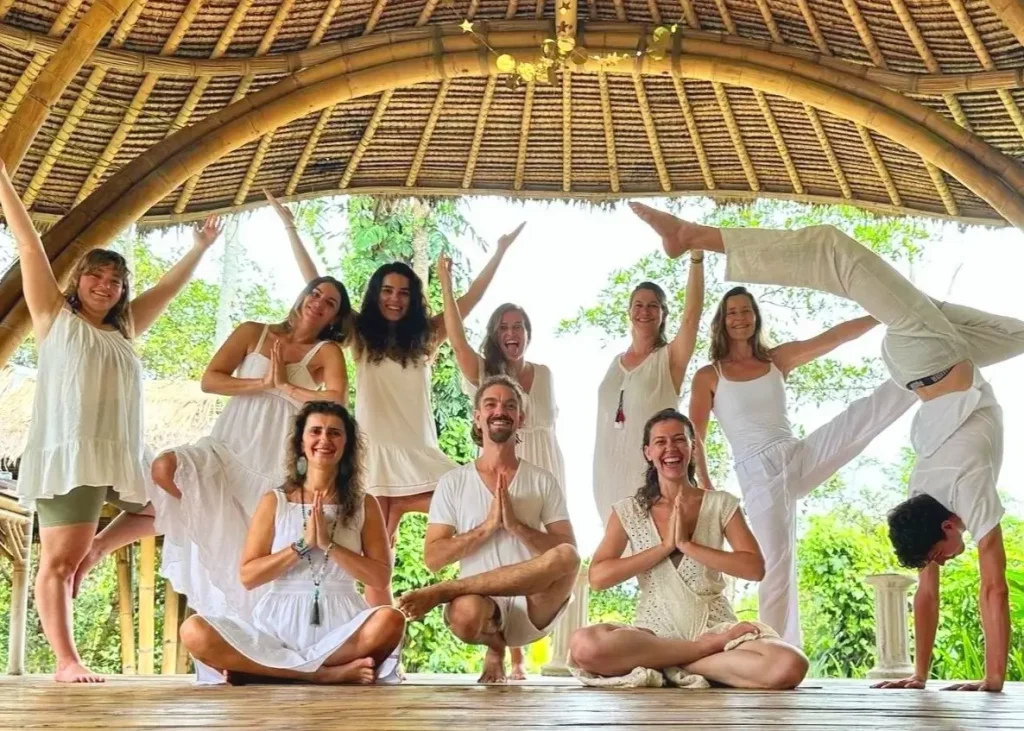
At our place, we move past the modern dilution of “Yoga as exercise.” Located in a serene jungle eco-village in Pejeng, Bali, we honor the traditional lineage where it is a living philosophy.
Our approach treats asana as a foundation, not an endpoint. We integrate pranayama (breathwork), meditation, and philosophy into every session to ensure a complete transformation of the practitioner.
Join Our Community in Pejeng
If you are ready to discover the true depth of what is yoga, we invite you to experience our traditional teachings:
- 200-Hour Yoga Teacher Training: A foundational immersion into authentic Hatha and the yogic lifestyle.
- 300-Hour Advanced training: For those seeking self-mastery and a deeper understanding of complex spiritual mechanics.
- Weekly Classes: Open sessions held in our bamboo shala, overlooking the lush Ubud jungle.
Are you ready to move from restlessness toward clarity? Contact us via email or WhatsApp to learn more about the most authentic yoga courses in Bali. Let us welcome you into a community dedicated to the path of true liberation.