Bali is the undisputed global hub for Yoga Alliance-certified Yoga Teacher Training (YTT). Every year, thousands of aspiring teachers and dedicated practitioners travel to this Indonesian island to deepen their practice. Whether you seek the spiritual jungle of Ubud or the coastal energy of Canggu, Bali provides a transformative environment to master the ancient science of yoga.
This comprehensive guide breaks down everything you need to know about selecting, booking, and completing your yoga teacher training in Bali.
Why Choose Bali for Your Yoga Teacher Training?
Bali carries a unique spiritual energy, often referred to as “The Island of the Gods.” Unlike western training environments, Bali seamlessly blends traditional Indian yogic philosophy with its native Balinese Hindu culture.
- Spiritual Immersive Environment: Daily life in Bali involves sacred rituals, temple offerings (Canang sari), and a profound respect for inner peace.
- World-Class Instructors: The island attracts elite, international master teachers across all major lineages.
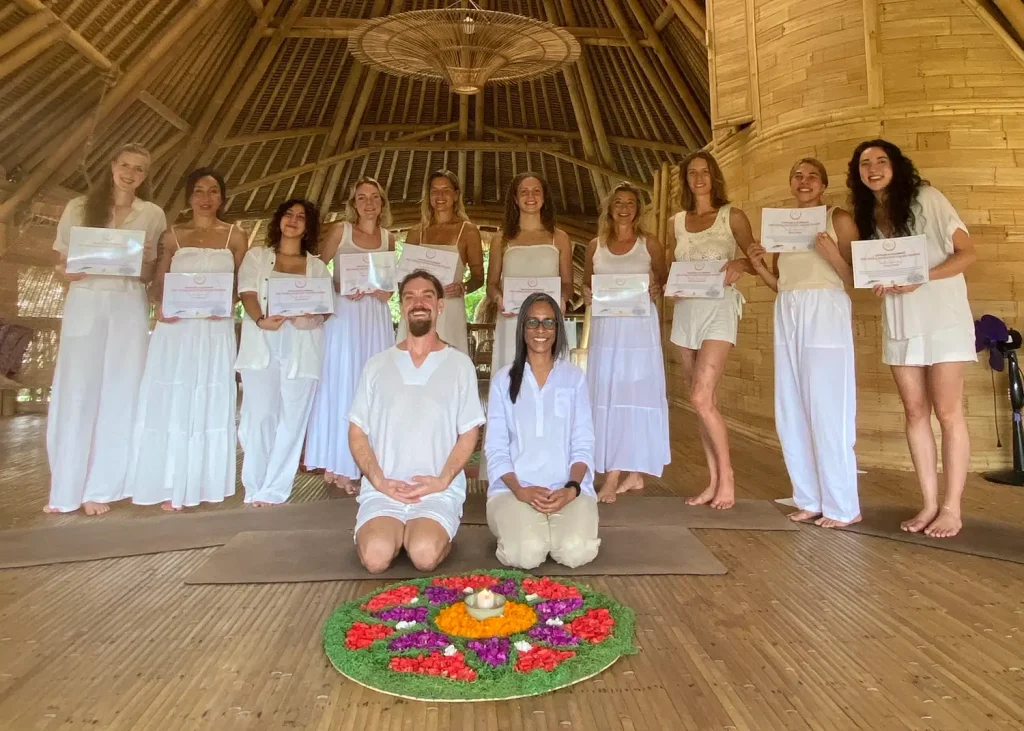
- Purpose-Built Shalas: You will practice in architectural wonders—open-air bamboo shalas surrounded by tropical rainforests, flowing rivers, or ocean waves.
Choosing Your Ideal Yoga Region in Bali
Your training environment directly impacts your focus and energy. Bali’s distinct regions cater to very different lifestyles and learning preferences.
1. Ubud: The Spiritual and Cultural Heart
Surrounded by dense rainforests, historic temples, and terraced rice fields, Ubud is ideal for traditionalists. The energy here is introspective and focused inward. It is the premier destination for studying classical Hatha, Ashtanga, pranayama, and meditation.
2. Canggu and Uluwatu: The Coastal, Modern Vibe
If you want to balance intense study with surf culture, beachfront cafes, and a lively social scene, the southern coast is your match. Programs here lean toward modern Vinyasa Flow, dynamic power styles, and multi-style formats that prepare you for the commercial fitness industry.
3. Sanur and Off-Shore Islands: The Peaceful Escape
For those seeking total quiet without the heavy crowds, coastal Sanur or the nearby island of Nusa Lembongan offer serene beachfront shalas. These locations are excellent for slower, restorative styles like Yin Yoga and Yoga Nidra.
Traditional vs. Modern Yoga Training paths
Before booking, you must decide whether you want a traditional, lineage-focused ashram experience or a modern, westernized studio environment.
| Feature | Traditional Yoga Ashrams | Modern Yoga Studios |
|---|---|---|
| Primary Goal | Self-realization, mental stillness, & energetic balance | Physical conditioning, flexibility, & stress relief |
| Pace of Movement | Slower, mindful holds focusing heavily on breath & alignment | Fast-paced, continuous flow (Vinyasa) driven by music |
| Philosophy Integration | Daily lectures on Sanskrit scriptures & lifestyle vows | Briefly themed concepts or positive quotes during practice |
| Environment & Vibe | Silent, nature-integrated eco-shalas or dedicated ashrams | Mirror-lined studios, social boutique environments, & music |
Top-Rated Yoga Teacher Training Schools in Bali
To help you choose, here is a curated overview of the highest-rated, Yoga Alliance-certified schools across the island.
| School Name | Location | Primary Yoga Styles | What Makes It Unique |
|---|---|---|---|
| Bali Yoga School | Ubud | Ashtanga & Vinyasa Flow | Traditional Indian lineage focus; runs highly structured monthly intakes. |
| Yoga New Vision | Ubud (Tegallalang) | Modern Hatha & Vinyasa | Science-led approach; balances ancient Eastern philosophy with Western anatomy. |
| SKY Yoga and Meditation | Ubud (Pejeng) | Traditional Hatha & Meditation | Taught in a quiet jungle eco-village; highly focused on internal transformation. |
| Joga Yoga Training | Canggu | Hatha, Vinyasa, & Yin | Social, retreat-style environment including Balinese massage and temple excursions. |
| Power of Now Oasis | Sanur | Hatha, Vinyasa, & Yin | The only premium, eco-friendly bamboo shala located directly on the beach. |
| ULU Yoga | Uluwatu | Multi-style & Aerial Yoga | Beautiful ocean-view shala; incorporates hybrid online and aerial styles. |
| Anand Ashram | Ubud | Classical Hatha & Kirtan | Holistic ashram living with daily fire rituals (Agnihotra) and mantra chanting. |
| The Practice | Canggu | Lineage-Based Traditional Hatha | Deep focus on yoga as an ancient science of energy control and mental mastery. |
Tuition, Packages, and Budget Breakdown
Yoga teacher training costs in Bali vary based on accommodation styles, meal inclusions, and school reputation. Programs generally run for 21 to 28 consecutive days for a 200-hour certification.
Budget Packages (~$1,200 – $1,800 USD)
These packages are often tuition-only (non-residential), meaning you must source your own food and accommodation nearby. If lodging is included, it is typically in shared, rustic dorms with basic amenities. Schools like Yogmantra Bali offer great options in this tier.
Mid-Range All-Inclusive (~$2,200 – $3,200 USD)
This is the most popular option. It covers the full curriculum, learning manuals, shared or private resort rooms, and two to three healthy vegetarian or vegan meals daily. YogaUnion Bali is a top-tier example of an all-inclusive mid-range program.
Premium and Luxury All-Inclusive (~$3,500 – $4,800+ USD)
Tailored for those who want ultimate comfort. These courses take place in luxury boutique eco-resorts. They feature low student-to-teacher ratios, private villas, infinity pools, organic gourmet meals, and spa treatments. Programs like East+West Yoga fall into this luxury bracket.
Core Curriculum: What to Expect During Your Training
A standard 200-Hour Yoga Teacher Training curriculum certified by Yoga Alliance is highly rigorous. You will study multiple hours a day across several main pillars:
- Asana Practice & Analytics (100+ Hours): Breaking down poses, learning safe alignments, modifications for injuries, and the art of hands-on adjustments.
- Anatomy & Physiology (20): Understanding the muscular, skeletal, and nervous systems as they apply to yogic movement and breathwork.
- Yoga Philosophy & Ethics (30 Hours): Studying historic texts like the Yoga Sutras of Patanjali and the Hatha Yoga Pradipika. You will learn the eight limbs of yoga, karma, and the lifestyle ethics of a teacher.
- Teaching Methodology (25 Hours): Learning how to sequence a class logically, use your voice effectively, manage class pacing, and build a successful yoga business.
- Practicum (10 Hours): Practicing teaching real classes to your fellow students and receiving direct feedback from your lead instructors.
3 Essential Factors to Verify Before Booking
To ensure a safe, legally compliant, and rewarding experience, check these three factors before sending a deposit:
- Yoga Alliance Certification: Ensure the school is explicitly registered as an RYS (Registered Yoga School). Without this label, you cannot register globally as an RYT (Registered Yoga Teacher) after graduating, which many western studios require for employment.
- Class Size Limitations: Ask the admissions team about their maximum student cap. Look for programs that cap classes at 15 to 22 students. Massive groups of 40+ students often result in a lack of personalized feedback and safety adjustments.
- Hidden Costs: Carefully review what your tuition covers. Check if airport transfers, course textbooks, local taxes, and weekend excursions are included, or if they require extra out-of-pocket fees.
Ready to Take the Next Step?
A yoga teacher training in Bali is an investment in your personal evolution, health, and future career. By choosing the right environment, lineage, and budget, you set yourself up for a profoundly rewarding journey.
Send us message if you are ready to take your YTT class or still have questions in mind!