Every 210 days, the island of Bali transforms into a vibrant display of devotion and color. If you’ve seen the towering bamboo poles (Penjor) lining the streets or locals dressed in stunning traditional white attire, you are witnessing Galungan and Kuningan.
But these are more than just beautiful festivals. They represent the core of Balinese Hindu philosophy: the triumph of Dharma (good) over Adharma (evil). At SKY Yoga & Meditation, we explore how these sacred traditions mirror the path of Yoga—finding balance between the material and spiritual worlds.
What is Galungan? The Victory of Dharma
Galungan is the most significant Balinese holiday, marking the time when ancestral spirits visit the Earth. The festival celebrates the victory of Dharma (truth and virtue) over Adharma (falsehood and ignorance).
Key Traditions of Galungan:
- Penyekeban: A day for spiritual purification and “sealing” worldly desires.
- Penyajahan: Preparing offerings and Balinese cakes to honor the ancestors.
- Penampahan: The day of preparation where dualities (effort and gratitude) are balanced.
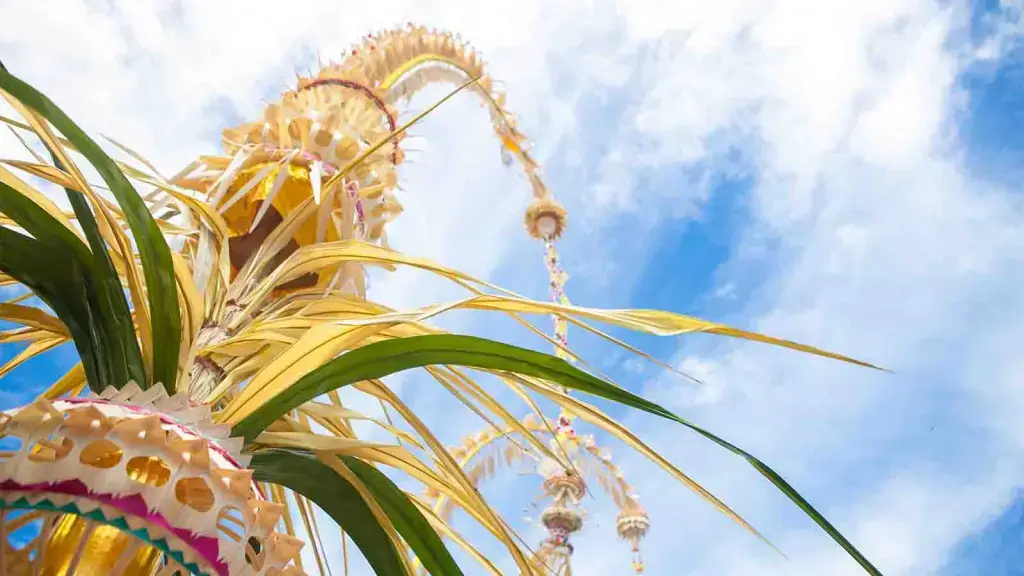
- The Penjor: These curved bamboo poles represent Mount Agung, the cosmic axis. Adorned with rice, fruits, and flowers, they symbolize the blessings of life and prosperity.
The Significance of Kuningan: Returning to the Light
Ten days after Galungan comes Kuningan, the day the spirits return to the heavens. The name comes from the word Kuning (yellow), which symbolizes purity, wisdom, and divine radiance.
While Galungan is about the victory of light, Kuningan focuses on maintaining that light. In Yogic terms, this transition mirrors the shift from Tapas (disciplined effort) to Santosha (contentment).
4 Mindfulness Lessons from Galungan and Kuningan
The philosophy behind these festivals offers powerful lessons for yoga practitioners and travelers alike:
- Embrace the Balance of Light and Shadow: Growth comes from witnessing both joy and struggle without judgment.
- Spiritual Renewal Requires Effort: Just as creating a Penjor is a mindful act of devotion, maintaining a meditation practice requires daily renewal.
- The Power of Sangha (Community): These festivals unite villages, reminding us that spirituality flourishes in community.
- Gratitude as a Foundation: The intricate Canang Sari (offerings) are physical expressions of gratitude—the same ground from which transformation grows in Yoga.
Visiting Bali During Galungan and Kuningan: A Guide for Travelers
If you are visiting Ubud or Pejeng during this sacred time, here is how to be a respectful observer:
Join a Workshop: Many communities in Pejeng offer Canang Sari making workshops to help you understand the local philosophy.
Plan Ahead: Many local businesses close so families can pray. Expect a slower pace of life.
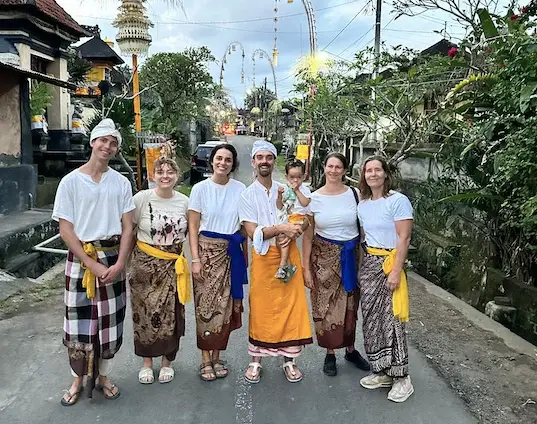
Dress Respectfully: When visiting temples, a sarong and sash are mandatory. Ensure your shoulders and knees are covered.
Observe Silently: Watch the processions quietly. The atmosphere is naturally meditative; use this time for your own inner reflection.
The Parallels Between Balinese Dharma and Yogic Philosophy
Both Balinese Hinduism and Yoga philosophy spring from the same ancient Vedic roots, sharing a worldview of harmony and cyclical balance.
In the Yoga Sutras of Patanjali, the inner battle between ignorance (avidya) and wisdom (vidya) mirrors the cosmic struggle between adharma and dharma. Yoga teaches that dharma is not a single act but a way of living — a commitment to awareness, truth, and right action, moment by moment.
Likewise, during Galungan, the Balinese renew this alignment through offerings, rituals, and introspection — acts that can be seen as forms of sadhana (spiritual practice).
Both traditions ultimately point toward the same goal: to live in harmony with ourselves, with others, and with the divine rhythm that connects all beings.
Mindfulness Lessons from Galungan and Kuningan
These sacred days offer powerful teachings that resonate far beyond Bali’s temples:
1. Light and Shadow Coexist
Just as Galungan celebrates light overcoming darkness, Yoga invites us to witness both joy and struggle without judgment. Growth arises from embracing both.
2. Renewal Requires Effort
Preparing offerings, cleaning altars, and creating penjor are mindful acts of devotion. Similarly, maintaining balance in Yoga and meditation requires daily renewal — returning again and again to the mat, to the breath, to awareness.
3. Community as Practice
Galungan and Kuningan remind us that spirituality is not solitary. Families gather, villages unite, and blessings are shared. At SKY, we honour the same spirit through shared meals, meditation circles, and group practice — because Yoga, like life, blossoms in community.
4. Gratitude as Foundation
Offerings are the language of gratitude. In Yoga, too, gratitude is the ground of transformation — an acknowledgment of the sacred in the ordinary.
For Foreign Visitors in Bali During Galungan and Kuningan
If you’re visiting Bali during this sacred period, it’s a rare chance to witness living spirituality in action. Here’s how to honour the moment:
- Plan Mindfully
Many businesses close so families can gather for prayer. Plan your travels around those days and avoid rushing through temple routes.
- Observe with Respect
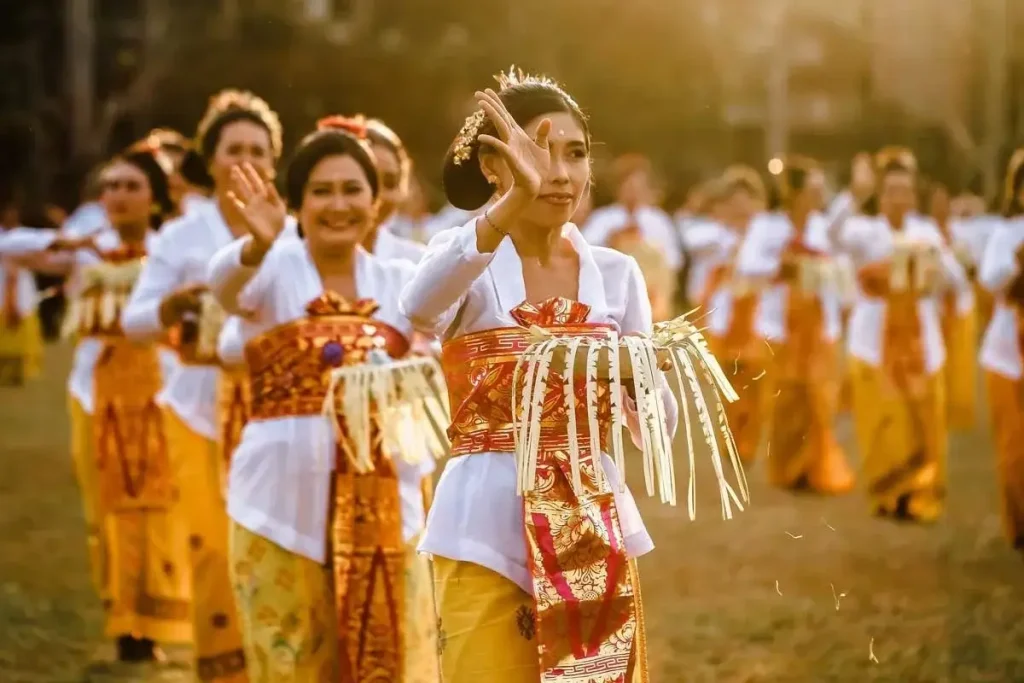
You’ll see people dressed in white and gold, carrying offerings. Pause, watch quietly, and feel the atmosphere — it’s a form of meditation in itself.
- Dress Appropriately for Temples
Sarong and sash are required; shoulders and knees should be covered. You can rent or borrow them near temple entrances.
- Join Cultural Workshops
In Ubud and Pejeng, many local communities offer canang sari (daily offering) or penjor-making workshops — a beautiful way to learn the philosophy behind the practice.
- Use the Energy for Inner Reflection
During Galungan, Bali’s vibration slows and deepens. Take time for meditation or Yoga at sunrise; feel how the island itself seems to breathe in stillness.
Tip: SKY Yoga & Meditation offers open classes and meditation sessions in our eco-village in Pejeng — a peaceful way to connect inward while honouring Bali’s outward devotion.
How SKY Yoga & Meditation Celebrates This Time
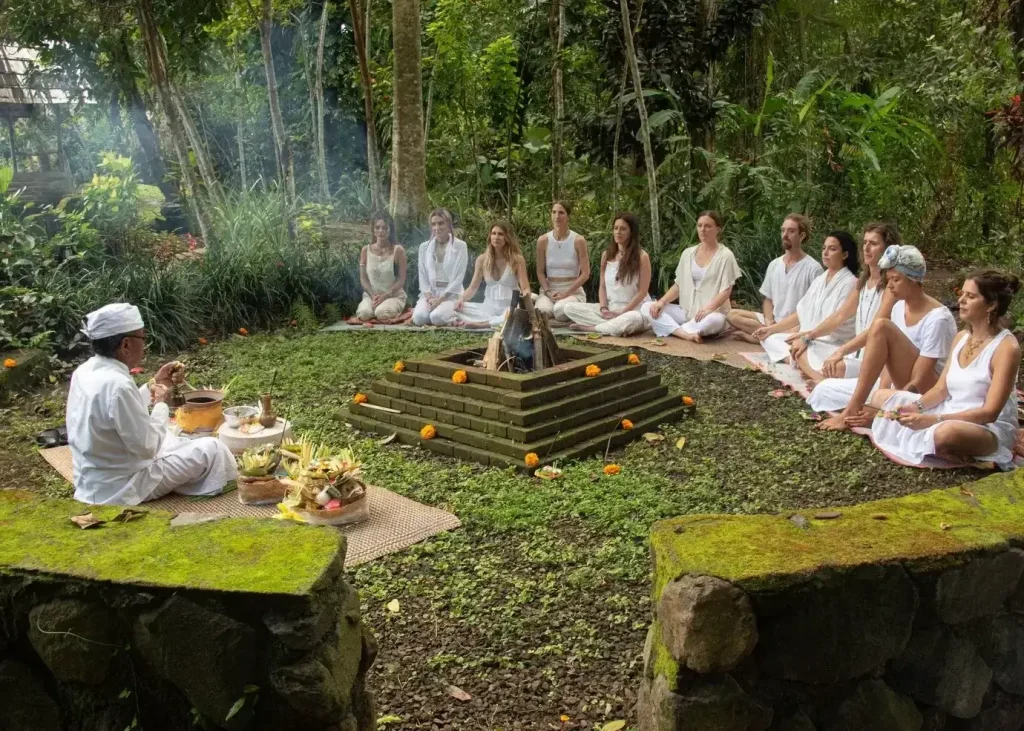
Located in the serene eco-village of Pejeng, SKY Yoga & Meditation honors Galungan and Kuningan as a living philosophy. Our students in the 200-Hour Yoga Teacher Training witness firsthand how Vedic roots connect Balinese Hinduism and Yogic philosophy.
From group meditations to decorating our space with traditional offerings, we invite our guests to feel the island’s deepening vibration.
Experience the Sacred Rhythm of Bali
Whether you are a seasoned yogi or a curious traveler, Galungan and Kuningan invite you to reconnect with your own “inner temple.”
Ready to deepen your practice in the heart of Bali? View our Daily Class Schedule or Join our next Sound Healing Course.
Beyond Ritual: The Universal Message
It’s easy to see Galungan and Kuningan as cultural spectacles. But when viewed through the lens of Yoga, they are living metaphors for the ongoing dance of consciousness.
They remind us that:
- Light must be renewed through awareness.
- Gratitude must be practised, not just felt.
- Balance is not static — it’s a rhythm we return to every day.
Whether you are Balinese, a Yoga practitioner, or simply a curious traveller, these festivals offer the same invitation: to reconnect with what is true, to celebrate the sacred in the ordinary, and to remember that dharma begins with awareness — right here, in this breath.
As the last offerings are placed and the penjor sway under the sun, Kuningan closes the sacred cycle — but not its meaning. Each of us continues that rhythm in our own lives: through practice, presence, and purpose.
At SKY Yoga & Meditation, we honour this time not only as a cultural celebration but as a living philosophy — one that reminds us that the real temple is within, and every mindful act is an offering.